
High-Impact Leaders
A high-impact leader is someone whose leadership improves the quality of thinking, decisions, ownership, relationships, and execution across the organisation.
High-impact leaders create clarity where there is complexity. They improve decision quality where there is hesitation. They build ownership where there is dependence. They establish execution rhythm where there is drift. They inspire alignment where there are competing priorities.
They do not become the answer to every issue. They build the leadership capability that allows the organisation to think better, decide better, and execute better.
A leader’s impact is not measured only by what they personally achieve – it is also measured by what they enable others to achieve.
This is especially important for CEOs, founders, professional CEOs, and second-generation business leaders who are leading businesses through growth, complexity, transition, or scale.
How High-Impact Leaders Lead
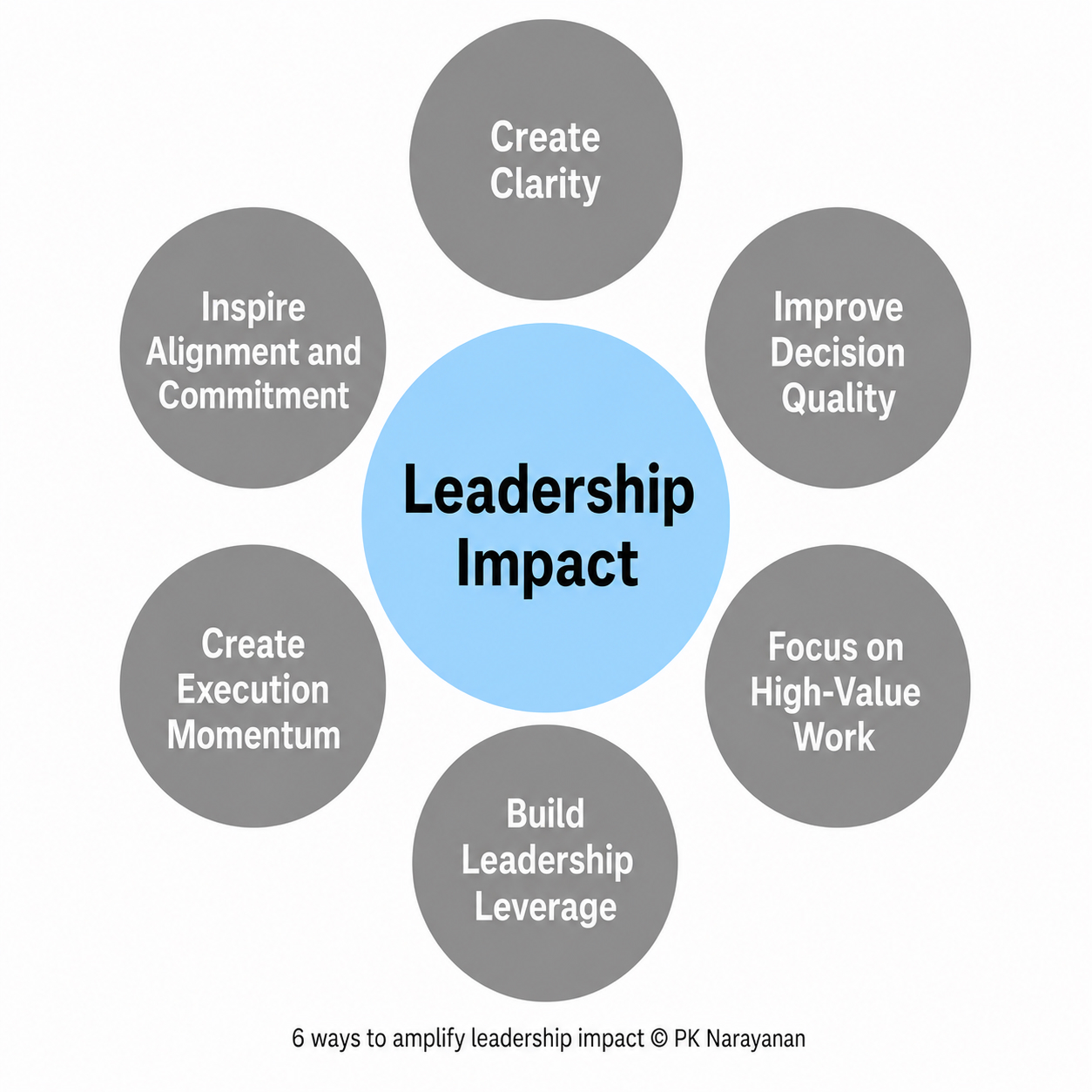
High-Impact Leaders lead with greater clarity, calm, and influence. They create stronger ownership, better execution, and greater strategic momentum across the business – not by carrying more, but by multiplying leadership impact across the organisation.
They understand that people look to them not only for decisions, but also for signals. The way a CEO responds under pressure shapes the emotional tone of the organisation. The way they communicate shapes priorities. The way they listen shapes trust and respect. The way they review performance shapes accountability.
High-impact leaders are therefore deliberate about how they show up.
Their leadership presence is felt by everyone around. They are present in their conversations and interactions. They listen deeply. They communicate with clarity and precision. They simplify complexity. They remain open and curious to different perspectives and new possibilities. They inspire and influence stakeholders. They regulate their emotions, especially when the situation is uncertain or demanding.
They also recognise that leadership impact is not created through authority alone. Authority may secure compliance, but it does not always create commitment. Sustainable impact comes from clarity, trust, respect, influence, and the ability to create meaningful alignment.
What Makes a High-Impact Leader?
High-impact leadership is not a personality type. It is not about being naturally charismatic, forceful, extroverted, or commanding.
It is an evolved way of leading. It is about being a conscious leader, with enhanced leadership presence. It can be learnt, and practised.
What makes a high-impact leader is the ability to be effective internally and externally. The leader must be able to pause, think, listen, reflect, decide, communicate, inspire, influence, and act with intention. This requires a leader to be self-aware, and willing to keep evolving as the business grows.
Many CEOs reach a stage in their journey where their existing strengths are still valuable, but no longer sufficient. The habits that helped them build the business may begin to limit the next stage of growth. Strong personal involvement may create dependency. Quick decision-making may reduce ownership in others. Deep operational understanding may keep the CEO too close to day-to-day issues and their resolutions. High standards may unintentionally create fear or hesitation in the teams.
Becoming a high-impact leader often requires a conscious shift: from personal effectiveness to organisational effectiveness.
How Coaching Helps CEOs Become High-Impact Leaders
 Coaching provides a confidential thinking space for CEOs to examine how their leadership is currently shaping the business. And what is truly needed to take the business to the next level.
The work is not about giving generic advice or offering standard leadership techniques. It is about helping the CEO see their own leadership patterns clearly, understand where impact may be getting constrained, and identify the few shifts that can amplify their impact and create disproportionate value.
Through coaching, CEOs can strengthen their leadership presence, improve decision quality, build leadership leverage, bring greater clarity, sharpen communication, create stronger review rhythms, and develop greater calm and clarity under pressure.
For CEOs who are ready to elevate their leadership impact, coaching can provide a quiet, structured, and confidential space to make this shift happen consciously.
The outcome is not merely a more confident CEO, but a CEO who creates greater confidence, clarity, ownership, and momentum across the organisation.